
Rethinking the Chassis: How Steelfast Engineered Welding Out of Modular Manufacturing
How live video can expand inspection capacity without reducing regulatory control.

Rahul Bajaj, PE, MCP, is theTechnical Director at PFS TECO, an NFPA Global Solutions Company
Remote video inspection can become an established part of modular oversight, but only when it preserves the elements that make an in-person inspection credible. The inspector must control what is shown, the unit and approved documents must be clearly identified, the observation must occur in real time, and the record must support the compliance decision later.
Those controls are achievable. Remote inspection already works well for selected production stages, follow-up observations, and repetitive work at established factories. It is less suitable for unfamiliar operations, complex concealed work, unreliable connections, or situations where the inspector needs direct physical access. The practical question is how regulators, third-party agencies, and manufacturers can use remote inspection without weakening oversight.
Why Remote Inspection Matters
Factory production moves on a schedule that does not always align with travel. A wall cavity may be ready for inspection on Tuesday afternoon and covered Wednesday morning. The qualified inspector may be several states away. Delaying production until an inspector arrives can disrupt the line, while covering work before inspection creates an obvious compliance problem.

Figure 1. A modular unit is lowered into place in Oakland, California.
Photo: ArcMath via Wikimedia Commons, CC BY-SA 4.0.
A controlled remote inspection can reduce that conflict. It can give an inspector access to a production stage on short notice, allow a specialist to participate without a full travel day, and make follow-up verification easier. Beyond reduced travel, the larger gain is better access to qualified inspectors at the point when the work is visible.
Speed alone does not make the process acceptable. If a remote inspection becomes an informal video call with no unit identification, no control over the camera, and no retrievable record, it is weaker than an in-person visit. A defensible program must treat the remote session as an inspection, with the same authority, documentation, and consequences as an on-site inspection.
What ICC/MBI 1205 Contributes
ICC/MBI 1205 is the Standard for Off-Site Construction: Inspection and Regulatory Compliance. The 2021 edition gives jurisdictions and industry participants a common framework for the inspection and regulatory side of off-site construction. That framework is useful because an inspection is more than the moment an inspector looks at the work. It also depends on approved documents, defined responsibilities, quality-control procedures, correction of nonconforming work, record retention, and regulatory control over certification marks or insignia.
ICC/MBI 1205 should not be described as automatic permission to conduct remote inspections. Each state or jurisdiction still decides whether remote inspection is allowed and what conditions apply. Adoption of the standard can establish a common compliance structure, while a rule, policy, bulletin, or written approval addresses the remote method itself.
This distinction matters as more state programs consider remote inspection. A common standard can reduce procedural variation, but it does not eliminate state authority. The remote procedure must fit the adopted rules and the approved third-party agency program in every jurisdiction where it is used.
Where Remote Inspection Works Well
Remote inspection is strongest when the work is visible, the inspection point is well defined, and the manufacturer has a reliable quality-control program. Good candidates often include routine production stages at an established plant, follow-up inspection of a previously documented deviation, verification of labels and unit identification, dimensional checks, and observation of accessible mechanical, electrical, or plumbing work before concealment.
Some tests can also be witnessed remotely when the inspector can see the test setup, instrument, reading, duration, and result without interruption. The inspector must be able to require the test to be repeated or viewed from another angle. If the camera view cannot establish those facts, the inspection method is inadequate even if the test itself was performed correctly.
A useful screening test is whether the inspector can answer four questions with confidence:
- Is this the correct unit, production line, and inspection stage?
- Are the approved plans and applicable quality-control documents available during the inspection?
- Can the inspector see every item needed to make the compliance decision?
- Can the inspection record be retrieved later and tied to the same unit?

A remote inspector directs a live factory walkthrough while reviewing plans and inspection records. AI-generated concept image.
If any answer is no, the inspection should be postponed, converted to an in-person visit, or limited to the items that can be verified.
Inspector Control Must Remain With the Inspector
The person holding the camera is usually a manufacturer representative, but that person does not control the inspection. The inspector selects the sequence, directs the camera, requests lighting or measurements, asks for assemblies to be opened, and decides whether the view is sufficient. The inspector must also be able to pause the session to compare the work with the approved plans or to document a deviation.
Live communication is important because it lets the inspector test what is being shown. A prerecorded video may document production, but it does not let the inspector change direction, revisit an area, verify context, or request an immediate measurement. Prerecorded material can supplement the inspection record. It should not replace the controlled live observation unless the governing program expressly allows it for a defined purpose.
The inspector also needs the authority to stop the remote inspection. Poor connectivity, inadequate lighting, camera limitations, unsafe conditions, an unprepared production stage, or uncertainty about unit identity are valid reasons to end the session. Converting an inspection to an on-site visit is a control, not a failure of the remote process.

Digital factory controls can support traceability, but the inspector must remain in control of the observation. Photo: Nenad Stojković via Wikimedia Commons, CC BY 2.0.

Documentation Creates the Audit Trail
A remote inspection is only as strong as its audit trail. The record should allow a regulator or another qualified reviewer to understand what was inspected, which documents controlled the work, what the inspector observed, and how any nonconformance was resolved. At a minimum, the inspection file should identify:
- The manufacturer, plant location, unit serial number, VIN, insignia number, or other approved identifier
- The approved plan set and revision used during the inspection
- The date, time, inspector, manufacturer representative, and inspection stage
- The areas observed, measurements taken, and tests witnessed
- Photographs, video, screenshots, or other records required by the governing program
- Each deviation, required correction, follow-up observation, and final disposition
- The decision to authorize, withhold, or release a certification mark or insignia

Unit identification, measurements, photographs, and digital records work together to create traceability. AI-generated concept image.
Records should be stored securely and indexed so they can be retrieved by the unit identifier. A folder of unlabeled video files is not traceability. The link between the inspection record, inspection report, approved plans, deviation history, and label control record must be clear.
Adoption Is Expanding
ICC/MBI 1205 is moving from a model standard into broader use. The International Code Council reports that ICC/MBI Standards 1200 and 1205 have been adopted in Virginia, Utah, Montana, Rhode Island, Colorado, Maine, and New Hampshire. The 2027 I-Codes incorporate Standards 1200, 1205, and 1210 into the model-code framework. They will not become automatically enforceable nationwide. They apply only when a jurisdiction adopts the relevant 2027 I-Code provisions and retains them without amendment. The federal Uniform Facilities Criteria also references the 1200 series.
Adoption does not make remote inspections automatic. Each jurisdiction still decides when the method is allowed and what procedures apply. The important trend is that more programs now have a common framework for inspector authority, in-plant and final inspections, third-party oversight, records, and regulatory compliance.
That common framework makes it easier for states to authorize remote methods without giving up control. A state can define eligible inspection stages, require live two-way communication, specify record retention and unit identification, and reserve in-person inspection when the evidence or risk demands it.
Where In-Person Inspection Still Matters
An initial factory certification, a new production line, or the first units built under a new quality-control program generally deserve an in-person inspection. The inspector needs to understand the plant, personnel, material flow, storage, equipment, and actual production practices. That broader context is difficult to establish through a phone camera.
In-person inspection is also appropriate when critical work cannot be viewed clearly, the inspector needs independent physical access, test equipment or measurements cannot be verified remotely, or the manufacturer has repeated nonconformances. Jurisdiction-specific requirements may also mandate an on-site visit regardless of technical feasibility.
Remote inspection should never reduce the required inspection scope or transfer judgment to the manufacturer. When the remote method cannot produce enough evidence for the inspector to make the decision, the work needs an in-person inspection.
The Hybrid Model Is the Likely End State
The most practical program combines remote and in-person oversight. Initial certification and periodic plant audits can remain on-site. Routine production stages and targeted follow-up work can be handled remotely when the plant, work, and technology meet defined criteria. Random on-site verification can confirm that the remote record matches actual factory practice.
The mix should depend on risk and performance. A plant with trained quality-control staff, stable production, complete records, and a strong compliance history may qualify for broader remote use. A new or poorly performing plant should receive more on-site attention. The agency should document the criteria and retain the ability to change the inspection method when conditions change.
At PFS TECO, An NFPA Global Solutions Company, we are discussing remote inspection procedures with several state programs. Those conversations are encouraging, but approvals and operating details remain jurisdiction-specific. The standards should not be treated as nationwide authorization before individual programs act. A consistent framework is possible, even when state authorization develops at different speeds.
The Future of Factory Oversight
Remote inspection technology will continue to improve. Stabilized cameras, wearable devices, better cellular coverage, digital plan annotation, and unit-specific record systems can make it easier to see, direct, and preserve an inspection. Those tools can improve access, but they do not change the inspector's basic responsibility.
The test remains simple: Can the inspector observe enough to make the compliance decision, control the inspection process, and defend the record later? If yes, remote inspection can save time and expand access to qualified inspectors. If no, the inspector needs to be at the factory.
Réflexions finales
Remote inspection is becoming a practical part of modular construction oversight. Its value is greatest when it is used selectively, governed by clear procedures, and supported by complete traceability. ICC/MBI 1205 provides a useful compliance framework, while state rules determine how the remote method can be used.
The future is likely to include fewer unnecessary trips and more deliberate on-site visits. Routine observations can move online when the evidence is reliable. High-risk, unfamiliar, or poorly documented work should continue to receive direct physical inspection. That balance can improve scheduling and inspector availability without lowering the standard of oversight.
Rahul Bajaj is Technical Director at PFS TECO, An NFPA Global Solutions Company. He is a licensed Professional Engineer in multiple states and an ICC Master Code Professional. His work includes modular plan review, factory inspection oversight, state program coordination, and third-party agency compliance.
Plus de Modular Advantage
From Model to Machine: Why Modular Scale Is Becoming a Software Problem, not a Material One
For modular manufacturers that have already secured demand and repeatable volume, the next major constraint may no longer be forming capacity itself. Increasingly, it is the continuity of the information feeding that capacity.
Who Will Define Modular Products for AI?
Artificial intelligence is making building configurators easier and less expensive to create. This makes urgent manufacturers’ need portable product definitions, stable identities, and shared interfaces regardless of how others’ software is produced.
From BIM to Robotic Production: A Digital Workflow for Customized Components in Volumetric Modular Construction
For volumetric modular manufacturers, the value of this workflow is not simply the use of robotics. Its real value is continuity.
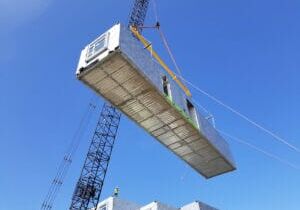
Helping Build a Common Framework for Modular Construction in Canada
Canada’s modular construction sector continues to gain momentum, but scaling it successfully will depend on shared expectations across design, manufacturing, approvals, and project delivery. CSA Z251 helps provide that common foundation.
Edges, Exits & Equipment: A Modular Builder’s Guide to Rooftop Access
Rooftop access belongs in the factory design. Before the modules ship, the project team should identify each route’s users, confirm applicable requirements, coordinate with the roof system and structure, and assign responsibility.
When Timber Production and Modular Construction Share One System
As demand for multifamily and workforce housing continues to outpace what conventional construction timelines can deliver, models that reduce the number of handoffs between structural fabrication and modular assembly are likely to draw more attention.
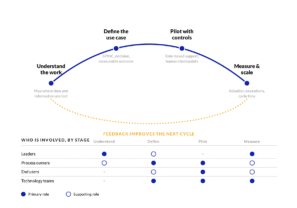
Your AI Strategy Is an Enablement Strategy
Tools will change. Teaching employees only the steps in one platform creates a narrow capability. Involving them in problem definition, process mapping, data assessment, controls, and measurement gives the organization a way to improve its systems as technology evolves.

By-Right Permitting: The Missing Lever for Scaling Modular Multifamily
Modular has already proven it can outperform traditional building methods on speed and cost per unit. The next frontier is outside the factory in the front end of the process, where projects either clear a path to construction or get stuck in review.
Reimagining Dry-In: How a Temporary-to-Permanent Roofing Strategy Mitigates Risk Between Modular Installation and Final Roof Construction
As volumetric modular projects continue to increase in scale and complexity, the Temporary-to-Permanent FiberTite Roof System represents an example of how traditional trade scopes can be reimagined through Design for Manufacturing and Assembly (DfMA) principles.
The Robotic Advantage: Addressing Labor and Quality Challenges in Construction Finishing
The off-site industry has already moved construction from an unpredictable jobsite into a controlled manufacturing environment. The next evolution is to make that environment increasingly intelligent, adaptable and automated.