
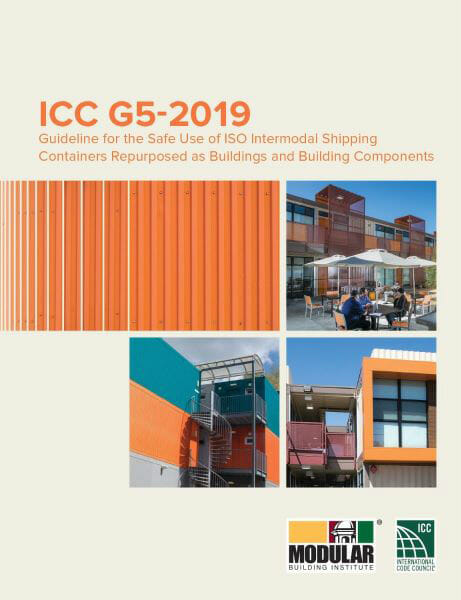
MBI et l'International Code Council collaborent à la publication d'un guide pour l'utilisation en toute sécurité des conteneurs d'expédition intermodaux ISO reconvertis en bâtiments et en éléments de construction
Plus de 30 millions de conteneurs maritimes intermodaux ISO sont utilisés dans le monde aujourd'hui. Ces conteneurs ont été construits selon les normes ISO et entretenus selon les normes définies par la "Convention sur la sécurité des conteneurs" de l'Organisation maritime internationale (OMI).
Qu'ils soient neufs ou usagés, les conteneurs sont aujourd'hui réutilisés à un rythme qui fait de leur réutilisation une industrie mondiale de plusieurs milliards de dollars. Les conteneurs sont régulièrement réutilisés et convertis pour être utilisés dans le cadre du code résidentiel international et du code du bâtiment international. En tant que matériau de construction, les applications sont très diverses, tout comme la mesure dans laquelle le conteneur est utilisé comme élément structurel du bâtiment.
Les juridictions locales et les programmes administratifs des États réagissent à la tendance croissante de la réutilisation des conteneurs d'expédition, mais peuvent être en retard en termes de réglementation et de conformité. Cette directive de l'ICC a pour but d'aider les autorités locales et nationales ainsi que les propriétaires, les architectes, les constructeurs et les ingénieurs à évaluer la manière de concevoir, d'examiner et d'approuver les conteneurs d'expédition en tant qu'élément de construction.
La ligne directrice peut être achetée à la librairie de la CCI à l'adresse www.iccsafe.org.
Cet article a été initialement publié dans le magazine Modular Advantage - deuxième trimestre 2019 paru en mai 2019.
Plus de Modular Advantage
MBI Town Halls 2026: Reflections from Boston
By the end of 2026 MBI’s Government Affairs team will have traveled over 6,000 air miles to bring Town Hall events to five different cities in two countries.
Mind the Gap: The Interface Between Onsite and Offsite Construction
Every design for manufacture and assembly (DfMA) project — modular, mass timber, or panelized — is really two projects joined at a seam. One is built in a controlled factory to millimeter tolerances; the other in the field, in weather, to the looser tolerances of poured concrete and human hands. Between them sits an interface: where the factory’s precision meets the site’s reality.
Rules, Rails & Repeatability: Applying DfMA to Modular Healthcare
DfMA offers several advantages for healthcare projects, with faster delivery among the most valuable. Schedule matters when building new facilities, expanding campuses, renovating existing space or bringing care closer to communities that need it.
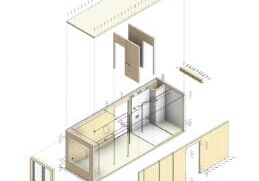
Precision and Possibility: Demands of DfMA and What Modular Mass Timber Makes Possible
Mass timber does not automatically create an efficient modular building. Its precision makes early coordination more important: fabricated components will accurately reproduce both the team’s solutions and its mistakes. The material’s advantages are realized only when supported by an equally precise design and delivery process.
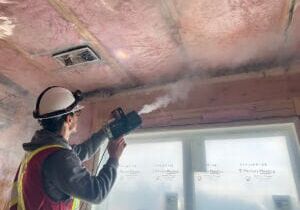
Catch It in the Factory, Not in the Field: Smarter Testing for Modular Builds
Integrating watertightness and airtightness testing into factory workflows transforms quality assurance from a reactive process into a proactive commissioning strategy. It ensures that every module shipped is field ready and resilient for transportation while also supporting the ability of the modular construction industry to make buildings better.
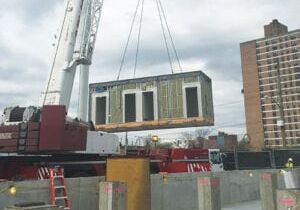
Modular Construction Contracts: Key Considerations for Successful Canadian Projects
Starting a modular project with a well-developed contract protects both the owner and the contractor. It will help keep the project on track and on budget, and it will improve quality from the factory floor to final installation on-site.
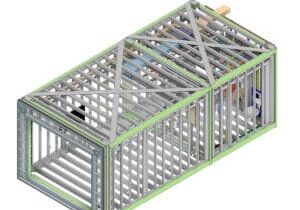
Modular by Design: Turning Architecture into a Manufacturing System
Modular construction is often presented as a faster way to build. Speed, however, is only one part of its value. The larger opportunity is to create a coordinated design and production system that improves quality, reduces uncertainty, and allows a building to move efficiently from concept design through manufacturing, transportation, installation, and completion.
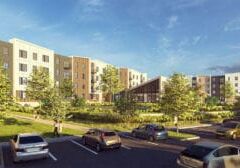
Repeatability Begins with Trust: What Alora at Dry Creek Reveals About Scaling Modular Housing
Alora at Dry Creek, a 329-unit, multifamily community comprising five four-story buildings in Centennial, Colorado, demonstrates how repeatable design, standardized manufacturing and early collaboration can work together to create a model that is not only faster to deliver, but easier to replicate across future projects.

T.R. Arnold: The Art of Third-Party Inspections
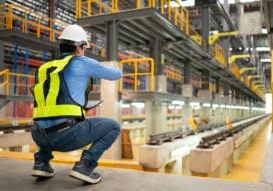
T.R. Arnold (TRA), a third-party inspection company in Elkhart, Indiana, contracts with modular manufacturers across the US. Manufacturers register with each state to which they intend to send their modules and may be required to hire a third-party inspection company.
Creating an ‘Ecosystem for Innovation:’ 50+ Years of Modular Construction Oversight in Virginia
Virginia’s modular building program began in 1973, with the implementation of the Virginia Industrialized Building Unit and Mobile Home Safety Regulations. Now it’s leading the country in modular code adoption.