
Building Customized Technical Containers for Data Centers and the Energy Sector
KAN-BUD Sp. z o.o., based in Poland, was founded by Sid Braaksma, owner of Northgate Industries in Edmonton.
The dynamic digitization of the economy, the rapid development of cloud services, and the ongoing energy transition are driving an unprecedented demand for reliable, scalable, and rapidly deployable technical infrastructure. Modular solutions, including specialized technical containers manufactured by KAN-BUD Sp. z o.o. from Poland, are the direct answer to these modern needs.
Kan-Bud was founded by Sid Braaksma, who is also the owner of Northgate Industries in Edmonton. For over 30 years, the company has been setting benchmarks in the field of advanced steel structures, providing high-end solutions for sectors with the most stringent requirements, including the military, energy, and IT industries.

Technical Containers for Data Centers: Mobile Computing Power
Modern data centers must not only be highly efficient but also flexible and secure. The definitive answer to these core challenges is modular data centers housed in containers. KAN-BUD specializes in delivering the made to order container solutions tailored specifically for the data center infrastructure industry. This solution is dedicated to companies that require scalable IT infrastructure that can be quickly implemented and, if necessary, seamlessly expanded or relocated to another site.
Key Features of KAN-BUD Data Centre Containers
- Advanced Thermal Insulation and Ventilation: Servers generate enormous amounts of heat. KAN-BUD containers are equipped with professional precision air conditioning systems and high-grade thermal insulation that maintains constant environmental parameters regardless of external weather conditions.
- Tightness and Protection Against External Factors: KAN-BUD containers are precisely engineered to withstand a wide range of adverse environmental conditions. For projects located in high-risk areas, the company offers reinforced structures specifically designed to maintain structural integrity during earthquakes and seismic activity.
- Fire Protection Systems: Integrated fire protection systems, often utilizing gas extinguishing systems that are completely safe for sensitive electronic equipment, are an essential element of every build.
- Integration with Power Supply Infrastructure: Server containers are designed from the ground up to work seamlessly with both external and internal power sources. This perfectly complements KAN-BUD's other key product line containers for power generators.
Every technical container is manufactured to the highest quality standards and delivered on time, reaching key customers who demand absolute reliability. Each container has confirmation of the static calculations for the given region of use and certificates.

Best Practices for Delivering Containerized Data Centers: The Enclosure Perspective
When delivering containerized data centers, the final operational performance relies heavily on the precision, durability, and specialized engineering of the physical shell. As a dedicated B2B partner providing custom modular enclosures for companies that manufacture data center infrastructure, KAN-BUD emphasizes several key best practices for seamless equipment integration:
- Early-Stage Co-Engineering: Infrastructure producers should collaborate with the enclosure manufacturer from the initial design phase to accurately map out internal space utilization, precision ventilation paths, and necessary structural reinforcements for heavy components like transformers.
- Strict Ingress Protection and Microclimate Control: The structural shell must feature advanced thermal insulation and certified IP sealing to guarantee that the partner's sensitive electronic and power infrastructure remains completely protected from dust, moisture, and extreme external weather conditions.
- Compliance-First Manufacturing: To ensure global reliability, enclosures must be built according to rigid structural and welding certifications (such as ISO 3834-2 and EN 1090-1), with the option for reinforced engineering to withstand seismic risks before any internal hardware is installed.
- Design for Standardized Scalability: Developing structural hulls with modularity in mind allows data center equipment manufacturers to deliver "plug-and-play" solutions that systems integrators can easily expand, interconnect, or relocate according to client needs.
Containers for Power Generators and Energy Banks (BESS): Independence and Security
Another vital area of KAN-BUD's activity is the production of technical containers designed for energy storage and power generation. In an era marked by unstable electricity prices and the critical need to ensure continuity of operation, especially in hospitals, data centers, and production plants, professional housing for power supply systems is absolutely essential.
Containers for Power Generators
KAN-BUD offers containers specifically designed for the installation of power generators. Far from being ordinary "sheds," these units are advanced acoustic and ventilation structures.
- Noise Reduction: One of the main challenges with generators is excessive noise. KAN-BUD containers are equipped with high-performance soundproof enclosures that allow noisy power units to be located even near noise-sensitive residential or office areas. The design allows for the seamless integration of additional, secure fuel tanks, which significantly extends the generator's operating time without the need for frequent manual intervention.
Containers for Energy Banks (Energy Storage)
The rapid development of renewable energy sources (RES) has created a surging demand for robust energy storage facilities. KAN-BUD expertly adapts its containers to accommodate massive lithium-ion batteries or other cutting-edge electricity storage technologies.
- Fire Safety: Energy storage facilities carry an inherent risk of fire, such as thermal runaway. To mitigate this, KAN-BUD containers can be equipped with advanced gas and temperature detection alongside automated extinguishing systems.
- Microclimate Control: Much like servers, batteries require optimal operating temperatures to perform efficiently and safely, which are consistently maintained by heavy-duty HVAC systems integrated directly into the container.
- Modularity and Scalability: Battery Energy Storage Systems (BESS) housed in these containers can be easily connected to one another, enabling the creation of high-capacity energy storage farms.
Engineering Without Compromise: Parameters and Certification
What truly sets KAN-BUD apart in the marketplace is the complete customization of each individual project to meet specific, highly technical client requirements:
- Floor Load Capacity: The structural frame can be heavily reinforced to support internal equipment weighing up to several tons, such as heavy transformers.
- Sealing (IP): Superior ingress protection guarantees total defense against dust and water penetration in harsh, demanding terrain conditions.
- Compliance with Standards: All production processes are carried out in strict accordance with globally recognized quality standards, certified under ISO 3834-2 (welding quality) and EN 1090-1 (steel structures).
Synergies and Cross-Continental Collaboration: Learning Across Borders
As both KAN-BUD and Northgate Industries operate under the same corporate ownership, the continuous exchange of knowledge and expertise between the Polish and Canadian teams has become a cornerstone of their shared success.
By actively sharing experiences regarding regional technical requirements, compliance standards, and client expectations across both continents, the workforce has developed a more versatile and comprehensive approach to project design. The requirements and certifications for buildings and containers on the European and American markets are different, and therefore consultations between both teams are necessary to avoid costly mistakes. This mutual transfer of insights and consistent inter-company support directly enhances workflow efficiency, enabling both organizations to execute complex projects more smoothly and deliver optimized, globally-informed solutions.

Conclusion: The Partner of Choice for Critical Infrastructure
KAN-BUD from Poland (EU) consistently proves that a container is much more than a metal box; it is an advanced, engineered enclosure protecting the most valuable resources of the modern economy: data and energy. Thanks to its strategic membership in the global Northgate group and 33 years of deep industry experience, the company stands as the partner of choice for international investors seeking mobility and uncompromised reliability.
Plus de Modular Advantage
MBI Town Halls 2026: Reflections from Boston
By the end of 2026 MBI’s Government Affairs team will have traveled over 6,000 air miles to bring Town Hall events to five different cities in two countries.
Mind the Gap: The Interface Between Onsite and Offsite Construction
Every design for manufacture and assembly (DfMA) project — modular, mass timber, or panelized — is really two projects joined at a seam. One is built in a controlled factory to millimeter tolerances; the other in the field, in weather, to the looser tolerances of poured concrete and human hands. Between them sits an interface: where the factory’s precision meets the site’s reality.
Rules, Rails & Repeatability: Applying DfMA to Modular Healthcare
DfMA offers several advantages for healthcare projects, with faster delivery among the most valuable. Schedule matters when building new facilities, expanding campuses, renovating existing space or bringing care closer to communities that need it.
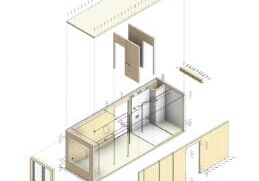
Precision and Possibility: Demands of DfMA and What Modular Mass Timber Makes Possible
Mass timber does not automatically create an efficient modular building. Its precision makes early coordination more important: fabricated components will accurately reproduce both the team’s solutions and its mistakes. The material’s advantages are realized only when supported by an equally precise design and delivery process.
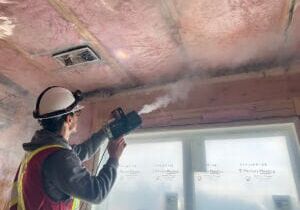
Catch It in the Factory, Not in the Field: Smarter Testing for Modular Builds
Integrating watertightness and airtightness testing into factory workflows transforms quality assurance from a reactive process into a proactive commissioning strategy. It ensures that every module shipped is field ready and resilient for transportation while also supporting the ability of the modular construction industry to make buildings better.
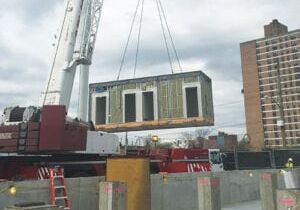
Modular Construction Contracts: Key Considerations for Successful Canadian Projects
Starting a modular project with a well-developed contract protects both the owner and the contractor. It will help keep the project on track and on budget, and it will improve quality from the factory floor to final installation on-site.
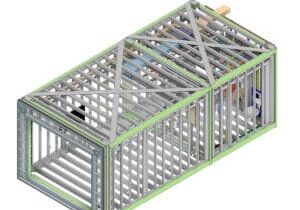
Modular by Design: Turning Architecture into a Manufacturing System
Modular construction is often presented as a faster way to build. Speed, however, is only one part of its value. The larger opportunity is to create a coordinated design and production system that improves quality, reduces uncertainty, and allows a building to move efficiently from concept design through manufacturing, transportation, installation, and completion.
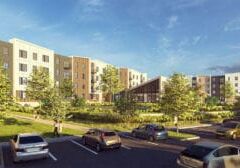
Repeatability Begins with Trust: What Alora at Dry Creek Reveals About Scaling Modular Housing
Alora at Dry Creek, a 329-unit, multifamily community comprising five four-story buildings in Centennial, Colorado, demonstrates how repeatable design, standardized manufacturing and early collaboration can work together to create a model that is not only faster to deliver, but easier to replicate across future projects.
T.R. Arnold: The Art of Third-Party Inspections
T.R. Arnold (TRA), a third-party inspection company in Elkhart, Indiana, contracts with modular manufacturers across the US. Manufacturers register with each state to which they intend to send their modules and may be required to hire a third-party inspection company.
Creating an ‘Ecosystem for Innovation:’ 50+ Years of Modular Construction Oversight in Virginia
Virginia’s modular building program began in 1973, with the implementation of the Virginia Industrialized Building Unit and Mobile Home Safety Regulations. Now it’s leading the country in modular code adoption.