
Creating an ‘Ecosystem for Innovation:’ 50+ Years of Modular Construction Oversight in Virginia
Florin Moldovan, State Building Codes Office Director for the Virginia Department of Housing and Community Development, sees the state’s modular inspection program less as a compliance tool and more as an ‘ecosystem for innovation.’ The program, started in 1973, has earned the industry’s trust through a shared understanding of its goals. Moldovan said, “The program earned trust not through persuasion, but through predictable results and a regulatory framework that balanced innovation with accountability.”
As a result, modular construction has gained broader acceptance across the state. “Developers are more willing to consider modular options, local officials are more comfortable reviewing and approving modular projects, and stakeholders, in general, see the system as reliable, consistent, and cost-effective,” said Moldovan. “The Virginia registration seal and the CAA (compliance assurance agency) label have become widely recognized indicators of code compliance and quality, giving local officials and industry partners confidence that factory-built units meet the requirements of the IBSR (Industrial Building Safety Regulations), as well as the Uniform Statewide Building Code (USBC).”
But standards alone aren’t enough to create a functioning modular program, said Moldovan. States need the infrastructure to support it, including a network of accredited CAAs, clear oversight procedures, and a strong alignment with local permitting and inspection authorities so everyone understands how the standards fit within each party’s existing responsibilities.
He also emphasized the importance of training for both regulators and manufacturers, as familiarity with standards helps prevent misinterpretations and builds confidence in the program. The International Code Council (ICC) and MBI standards are largely based on Virginia’s program, and each state determines its own laws, codes, and administrative structures, he said.

Program History
Virginia’s modular building program began in 1973, with the implementation of the Virginia Industrialized Building Unit and Mobile Home Safety Regulations. While there aren’t many records indicating exactly how the program began, Moldovan said it’s clear that it gained credibility because partners, including state agencies, local officials, CAAs, and manufacturers, saw that the program was designed to support both safety and production efficiency through fair enforcement.
It appears that everyone was cautious about the new system. There is anecdotal evidence that many were concerned about how much of the work would be inspected in the factory and whether the third-party agencies would uphold the same standards as local building officials. Manufacturers had questions about how the new requirements would translate into their factory processes and what level of oversight the state would have. Moldovan credits predictable results and a regulatory framework that balanced innovation and accountability, helping build trust among stakeholders over the years.
The ever-evolving program provides a strong foundation for modular construction in Virginia. The state partners with CAAs to provide project plan reviews and in-plant inspections throughout the construction cycle. Oversight, quality control reviews, audits, and education for CAAs are provided by the state. The State Building Codes Office sets criteria for selecting CAAs, defines their responsibilities, and requires ongoing audits to ensure their performance is transparent and consistent. The state reviews each agency’s documentation, records, and quality assurance manuals and monitors their performance through random plan reviews. Working together gives everyone confidence that CAAs' inspections meet the same standards as those for traditional site-built structures.
Moldovan said that using CAAs in this manner helps prevent bottlenecks caused by increased building activity and modest staffing levels while still ensuring compliance. As local building departments struggle to find qualified candidates to fill vacancies, CAAs provide a vital service that helps keep projects moving through the process. In 2025, the program issued more than 10,000 industrialized building seals. With much of the unit construction overseen by CAAs, local building officials can focus on site-specific concerns, improving building efficiency.
The department continues to provide education and training to local building officials, ensuring they’re familiar with the applicable codes and regulations governing modular buildings. In 2025, the department hosted six one-day training sessions across the state. This helps reduce confusion about responsibilities and streamlines the review and approval process.
The buy-in from all parties and “shared understanding of goals allows a modular program to move from just a compliance tool to a genuine ecosystem for innovation,” said Moldovan. Building officials must be on board to ensure a smooth process through permitting and inspections. State agencies need to ensure regulatory expectations are consistent and predictable. Manufacturers and third-party compliance assurance agencies must buy into the program structure and commit to meeting clear performance expectations.
Over its more than 50-year history, the program has built trust among building departments, contractors, developers, and building owners and occupants. “The Virginia registration seal and the CAA label have become widely recognized indicators of code compliance and quality. This gives local officials and industry partners confidence that factory-built units meet the standards of the IBSR and the USBC. That growing confidence has helped modular construction gain broader acceptance across the Commonwealth. Stakeholders see the system as reliable, consistent, and cost-effective.”
“The Virginia registration seal and the CAA label have become widely recognized indicators of code compliance and quality. This gives local officials and industry partners confidence that factory-built units meet the standards of the IBSR and the USBC. That growing confidence has helped modular construction gain broader acceptance across the Commonwealth. Stakeholders see the system as reliable, consistent, and cost-effective.”
- Florin Moldovan, State Building Codes Office Director for the Virginia Department of Housing and Community Development
Recent Changes
Virginia was the first state to adopt the ICC/MBI 1200 and 1205 standards for off-site construction. The standards were developed by MBI and the International Code Council (ICC) to outline exactly how third-party inspectors, remote virtual inspections, and data plates can be utilized to help guarantee modules meet local building codes. They address requirements for planning, design, fabrication, and assembly, as well as inspection and regulatory compliance.
Standard 1200 establishes planning and preparation requirements, including the roles and responsibilities of each member of a project team, control of the manufacturing environment, supply chain integration, and fabrication and assembly processes.
Standard 1205 provides requirements for the inspection, approval, and regulatory compliance of off-site components, including permitting, in-plant and on-site inspections, third-party agency roles, and state jurisdiction.
Both standards were designed to help alleviate problems caused by inspectors being unable to inspect hidden work once the modules arrive on site. Moldovan said that the standards provided a more detailed version of the practices Virginia already had in place and created consistent, transparent frameworks for manufacturers and third-party inspectors working across multiple states. He said it helped clarify expectations for both parties, especially regarding documentation, quality control procedures, and recordkeeping.
ICC/MBI Standard 1210, which addresses mechanical, electrical, and plumbing systems in modular construction, as well as energy efficiency and water conservation measures, is under consideration for incorporation into the 2027 International Building Code. If it’s approved, Virginia will consider adopting the standard in its 2027 USBC.
“Virginia remains open to new standards, like ICC/MBI 1210, because the Commonwealth is interested in responsibly supporting innovation, improving production efficiency, and addressing the long-term housing affordability and availability challenges that we’re all facing.”
Moldovan cautions other states looking to adopt these standards that the standards alone aren’t enough to create a functioning modular program. “States need the infrastructure to support them, including an accredited network of compliance assurance agencies, and clear oversight procedures. They also need a strong alignment with local permitting and inspection authorities, so everyone understands how the standards fit within their existing responsibilities.”
Regarder vers l'avenir
Moldovan hopes that soon he’ll see modular and traditional construction methods working together to help address the state’s growing housing needs, particularly when traditional construction alone can’t keep up with demand.
He would also like the program to keep pace with technological advancements and regulatory reforms that can help expedite production. All of this would be measured by the program’s ability to provide “more housing, more efficiently, as part of a broader statewide strategy to address affordability and availability, as well as long-term community needs.”
A propos de l'auteur : Dawn Killough est une rédactrice indépendante spécialisée dans la construction. Elle a plus de 25 ans d'expérience auprès d'entreprises de construction, de sous-traitants et d'entrepreneurs généraux. Ses publications sont disponibles sur le site dkilloughwriter.com.
Plus de Modular Advantage
MBI Town Halls 2026: Reflections from Boston
By the end of 2026 MBI’s Government Affairs team will have traveled over 6,000 air miles to bring Town Hall events to five different cities in two countries.

Mind the Gap: The Interface Between Onsite and Offsite Construction
Every design for manufacture and assembly (DfMA) project — modular, mass timber, or panelized — is really two projects joined at a seam. One is built in a controlled factory to millimeter tolerances; the other in the field, in weather, to the looser tolerances of poured concrete and human hands. Between them sits an interface: where the factory’s precision meets the site’s reality.
Rules, Rails & Repeatability: Applying DfMA to Modular Healthcare
DfMA offers several advantages for healthcare projects, with faster delivery among the most valuable. Schedule matters when building new facilities, expanding campuses, renovating existing space or bringing care closer to communities that need it.
Precision and Possibility: Demands of DfMA and What Modular Mass Timber Makes Possible
Mass timber does not automatically create an efficient modular building. Its precision makes early coordination more important: fabricated components will accurately reproduce both the team’s solutions and its mistakes. The material’s advantages are realized only when supported by an equally precise design and delivery process.
Catch It in the Factory, Not in the Field: Smarter Testing for Modular Builds
Integrating watertightness and airtightness testing into factory workflows transforms quality assurance from a reactive process into a proactive commissioning strategy. It ensures that every module shipped is field ready and resilient for transportation while also supporting the ability of the modular construction industry to make buildings better.
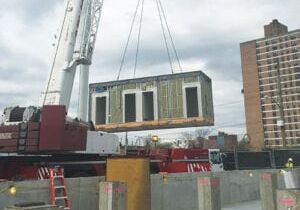
Modular Construction Contracts: Key Considerations for Successful Canadian Projects
Starting a modular project with a well-developed contract protects both the owner and the contractor. It will help keep the project on track and on budget, and it will improve quality from the factory floor to final installation on-site.
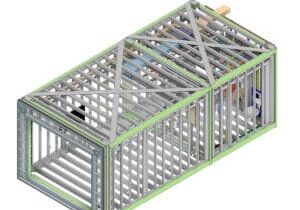
Modular by Design: Turning Architecture into a Manufacturing System
Modular construction is often presented as a faster way to build. Speed, however, is only one part of its value. The larger opportunity is to create a coordinated design and production system that improves quality, reduces uncertainty, and allows a building to move efficiently from concept design through manufacturing, transportation, installation, and completion.
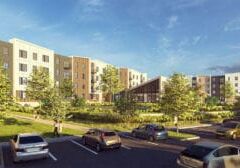
Repeatability Begins with Trust: What Alora at Dry Creek Reveals About Scaling Modular Housing
Alora at Dry Creek, a 329-unit, multifamily community comprising five four-story buildings in Centennial, Colorado, demonstrates how repeatable design, standardized manufacturing and early collaboration can work together to create a model that is not only faster to deliver, but easier to replicate across future projects.

T.R. Arnold: The Art of Third-Party Inspections
T.R. Arnold (TRA), a third-party inspection company in Elkhart, Indiana, contracts with modular manufacturers across the US. Manufacturers register with each state to which they intend to send their modules and may be required to hire a third-party inspection company.
Understanding Thermal Barriers Compliance Methods & Emerging NFPA-275 Foam Plastic Technologies
New fire barrier technologies are improving total costs and margins in major areas of construction, such as commercial, government, union and prevailing wage projects. These benefits translate into other large fringe areas, such as agriculture, commercial cold storage facilities, grow houses, outbuildings, military and aviation hangars.