
Your AI Strategy Is an Enablement Strategy
Building an AI-Ready Workforce in Modular Construction

Dyci Manns Sfregola, CSCP, is the founder of New Gen Architects and author of Next Level Construction Management.
A contractor can generate a bid comparison in minutes and still lose days resolving exclusions before an award. A modular factory can predict a material shortage and still miss its production slot if procurement, scheduling, and project delivery work from different dates. These are the kinds of problems that make AI implementations attractive. But what makes the implementation successful, is the team executing the work.
When considering an AI implementation, start with the business expected result: a faster, more reliable award decision; fewer production disruptions; or better coordination between the factory and jobsite. Then bring in the people who own the process. They know where information breaks down, which decisions require judgment, and what a new AI-enables workflow would need to handle.
User adoption is a critical factor in realizing value from a technology implementation. Employees need to understand why a tool is being introduced, how their work will change, and where their judgment remains essential. That preparation begins during planning and continues as teams use and improve the workflow. In modular construction, AI can support decisions across design, procurement, manufacturing, logistics, and jobsite work. Its value depends on clear processes, reliable data, accountable owners, and people prepared to act on the output. An AI strategy therefore needs a defined and intentional enablement strategy.

Why AI Pilots Struggle to Scale
A pilot or proof of concept can work well in one project or facility and still fail when expanded. Bid formats vary by trade and customer. Factory schedules depend on different materials, constraints, and definitions of readiness. Those differences expose assumptions that a small test never had to resolve.
Before expanding a pilot, leaders should test it against the variation they expect in real work. Take bid leveling, for example. That means comparing bids of different sizes and trades, documenting exceptions, and checking the AI-assisted result against the estimators’ current process. Did the team review bids faster without overlooking missing work in a subcontractor’s quote? Which exceptions needed review, and who resolved them? The answers tell managers what must be standardized, what support another team will need, and whether the use case is ready for wider use.
It is easy for an AI tool to extract subcontractor quotes, organize exclusions and assumptions, and flag scope gaps across competing bids in a confined pilot environment. To use it across all projects, however, teams need a common scope structure, rules for authoritative documents, an owner for each flagged exception, and an approval point before the comparison informs an award or budget. The same discipline applies to a factory scheduling use case: a useful shortage alert needs agreed material status, a clear decision owner, and a way to update the production plan. All of this is captured in the operating model and ways of working, not in the technical specifications of the tool.
Make Adoption Part of the Operating Model
Adoption depends on how work is assigned and decisions are made. In bid leveling, an estimator may own the final comparison while procurement confirms supplier terms, and a project manager checks schedule implications. In a modular factory, a shortage alert may require purchasing to confirm supply, production planning to resequence work, and project delivery to assess a site commitment. A faster signal will not help if no one owns the handoff or the decision.
Leaders should define those responsibilities, approval points, and escalation paths with the people who perform the work. They can identify the exceptions a system must handle and say when a simpler process change would solve the problem. Giving each team practice with its part of the workflow and simulating the end-to-end process makes adoption a shared operational responsibility.

Empower Teams to Define the Right Use Cases
The people closest to the work can point to repeated bid comparisons, missing supplier information, schedule changes that arrive too late, and systems that do not communicate. Their observations help leaders select use cases with enough volume, delay, or risk to justify a change.
A useful starting point is a SIPOC diagram that identifies the suppliers of information, the inputs, the processes, the outputs, and the customers who rely on the result. Then ask what task or decision should improve, how often it occurs, and what measurable result would show progress. A specific task and measurable outcome make it easier to evaluate whether AI is appropriate. A stable transaction may suit a rule-based workflow. A visibility problem may need a dashboard. An unnecessary handoff may call for process redesign.
Once a use case is selected, the team can test process and data readiness. Which records are authoritative? Who owns the inputs and validates the output? How are exceptions handled? Those answers determine whether the workflow can be used consistently beyond its first pilot team. For a modular manufacturer, a late design revision or material shortage can affect factory sequencing, site readiness, cash flow, and the project schedule. If procurement and production use different definitions of an available part, an AI-driven prediction alone will not resolve the conflict. The team must agree on the data and the decision it will support.

Build Enablement into Implementation
Enablement starts while the team designs the use case. Estimators, procurement staff, and project managers can review actual bid packages together, agree on scope categories, and test how flagged exceptions reach an award decision. In a factory, planners and supervisors can walk through a real shortage scenario to decide when to change task order schedules for production and who informs the project team of those changes. These working sessions turn a promising concept into an operating process.
AI training and user enablement should then follow the decisions each role makes. Estimators practice checking extracted terms against source quotes. Procurement confirms supplier assumptions. Factory planners test the impact of a shortage on the sequence, while managers learn when to pause or escalate. Technology teams use the corrections and exceptions to refine the tool. After launch, teams should keep reviewing recurring issues and updating the workflow.
Human review needs a defined place in that workflow. A responsible estimator checks flagged scope gaps against the quote before a comparison informs an award. A production planner checks the material status and downstream commitments before changing a factory sequence. Recording the resolution helps the next team apply the same rules and reveals what the system repeatedly misses.

Measure Adoption and Continuously Improve
When it comes to user enablement, companies should measure more than course completion or attendance. Useful measures include the quality of use cases identified, time from idea to pilot, full company adoption by intended users, exception rates, hours of manual work reduced, and improvements in accuracy or cycle time. These indicators show whether enablement is building lasting capability.
Tools will change. Teaching employees only the steps in one platform creates a narrow capability. Involving them in problem definition, process mapping, data assessment, controls, and measurement gives the organization a way to improve its systems as technology evolves. User adoption is the critical path that connects technology to daily work and realized value. For modular construction, the opportunity is to help people use technology to coordinate work, reduce administrative effort, protect quality, and make better decisions across the project lifecycle.
Dyci Manns Sfregola, CSCP, is the founder of New Gen Architects, author of Next Level Construction Management, and a LinkedIn Learning instructor. She helps large contractors and modular manufacturers identify opportunities for digitalization and prepare teams to adopt new tools. Her work spans planning, procurement, project delivery, and technology enablement.
Plus de Modular Advantage
From Model to Machine: Why Modular Scale Is Becoming a Software Problem, not a Material One
For modular manufacturers that have already secured demand and repeatable volume, the next major constraint may no longer be forming capacity itself. Increasingly, it is the continuity of the information feeding that capacity.
Who Will Define Modular Products for AI?
Artificial intelligence is making building configurators easier and less expensive to create. This makes urgent manufacturers’ need portable product definitions, stable identities, and shared interfaces regardless of how others’ software is produced.
From BIM to Robotic Production: A Digital Workflow for Customized Components in Volumetric Modular Construction
For volumetric modular manufacturers, the value of this workflow is not simply the use of robotics. Its real value is continuity.

Helping Build a Common Framework for Modular Construction in Canada
Canada’s modular construction sector continues to gain momentum, but scaling it successfully will depend on shared expectations across design, manufacturing, approvals, and project delivery. CSA Z251 helps provide that common foundation.
Edges, Exits & Equipment: A Modular Builder’s Guide to Rooftop Access
Rooftop access belongs in the factory design. Before the modules ship, the project team should identify each route’s users, confirm applicable requirements, coordinate with the roof system and structure, and assign responsibility.
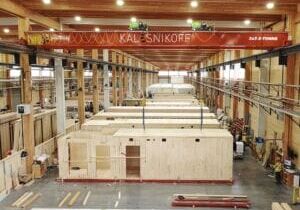
When Timber Production and Modular Construction Share One System
As demand for multifamily and workforce housing continues to outpace what conventional construction timelines can deliver, models that reduce the number of handoffs between structural fabrication and modular assembly are likely to draw more attention.

By-Right Permitting: The Missing Lever for Scaling Modular Multifamily
Modular has already proven it can outperform traditional building methods on speed and cost per unit. The next frontier is outside the factory in the front end of the process, where projects either clear a path to construction or get stuck in review.

Remote Inspections and The Future of Factory Oversight
Remote inspection is becoming a practical part of modular construction oversight. Its value is greatest when it is used selectively, governed by clear procedures, and supported by complete traceability.
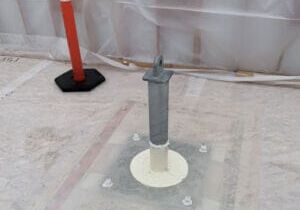
Reimagining Dry-In: How a Temporary-to-Permanent Roofing Strategy Mitigates Risk Between Modular Installation and Final Roof Construction
As volumetric modular projects continue to increase in scale and complexity, the Temporary-to-Permanent FiberTite Roof System represents an example of how traditional trade scopes can be reimagined through Design for Manufacturing and Assembly (DfMA) principles.

The Robotic Advantage: Addressing Labor and Quality Challenges in Construction Finishing
The off-site industry has already moved construction from an unpredictable jobsite into a controlled manufacturing environment. The next evolution is to make that environment increasingly intelligent, adaptable and automated.