
Helping Build a Common Framework for Modular Construction in Canada

Dwayne Torrey is the Director, Construction and Infrastructure Standards at the Canadian Standards Association
Canada is facing a critical housing shortage. Demand has far outstripped supply and governments across the country have implemented policy solutions to increase the number of homes on the market.
Concurrently, governments and the private sector are investing in new Nation Building Projects including ports, mines, and energy-generating facilities. Yet demand for both housing and infrastructure continues to outpace delivery.
These challenges are compounded by a constrained labour market, where demand for skilled tradespeople remains high. Simultaneously, inflation and supply chain issues have driven up the cost of construction materials by more than 50 per cent since 2020.
As governments and industry look for ways to deliver housing and infrastructure projects quickly and efficiently, modular construction is increasingly being considered as part of a broader mix of approaches available to address these challenges. However, scaling modular construction requires more than just investments and manufacturing capacity. The industry also needs trusted standards that support safety, quality, and consistency and are applicable across provincial and territorial jurisdictions.
The Modular Moment in Canada
Canada’s modular construction industry is uniquely positioned to meet Canada’s housing and infrastructure needs by delivering projects 20 to 50 per cent faster and more efficiently. In fact, governments are betting on it.
In September 2025, the federal government announced the launch of Build Canada Homes, a federal agency tasked with building affordable housing at scale using modern methods of construction, including modular, factory-built housing and mass timber. Government interest in modular construction stems from its potential to deliver projects faster, reduce material waste and improve worker safety through factory-based manufacturing.
At the provincial level, modular construction is already being used to accelerate housing and public infrastructure delivery. In October 2024, the Alberta government committed $112 million to build modular housing for residents displaced by the Jasper wildfires. In April 2026, the province announced a further $200 million investment to build 189 modular classrooms in fast-growing communities, creating 5,450 new student spaces.
At the same time, the modular industry is experiencing significant growth. According to MBI’s latest data, Canada’s modular industry is valued at $5.5 billion and is expected to grow at 5.2 per cent annually through 2029.
While modular is well suited to the moment, many Canadians remain uncertain about what modular construction is and how it works. One way to address that lack of understanding is through standards that provide a common framework for design, manufacturing, approvals, and project delivery. In doing so, they can help build trust and confidence in modular construction among construction professionals, regulators, and project owners alike.
CSA Z251, Design of Volumetric Modular Structures
In September, the Canadian Standards Association (CSA), a Canadian standards development organization, published CSA Z251, Design of volumetric modular structures. CSA Z251 is a National Standard of Canada and the fourth in CSA’s suite of standards addressing modular construction, providing guidance for the safe and efficient construction of volumetric modular buildings. The standard addresses structural design (including design for transportation, storage and installation), building services, environmental separation, fire protection, manufacturing, energy efficiency design considerations, and architectural considerations.
Created with input from architects, engineers, manufacturers, academia, and provincial and municipal building officials, it provides technical requirements for buildings that use permanently installed volumetric modules. Broad industry collaboration helped ensure the standard reflects the practical needs of interested parties involved throughout the design, manufacturing, approval, and construction processes.
CSA Z251 supplements the National Building Code of Canada (NBC) by providing additional guidance for modular construction. While the NBC sets requirements for the building, modular construction presents unique design and construction considerations beyond the NBC’s scope. By providing additional guidance specific to volumetric modular construction, CSA Z251 can help support greater consistency from project to project and between jurisdictions.
CSA’s suite of modular construction standards was developed to work together to support the design, manufacturing, certification, delivery, and approval of volumetric modular projects. Together, these standards help provide a more consistent approach from concept and factory production through to installation and occupancy. The standards in the suite include:
- CSA A277, Procedure for certification of prefabricated buildings, modules, and panels, provides requirements for the certification of prefabricated buildings and partially or fully enclosed modules and panels and helps support safety, quality, and compliance with local building requirements. CSA A277 is also referenced in the Division A Notes of Part 1 of the NBC.
- CSA Z250, Process for delivery of volumetric modular buildings, describes processes for delivering volumetric modules constructed in a factory, including general design; logistics, transportation and storage; non-modular and modular sitework; lifting, placement, and setting of the units; installation and finishing; and commissioning and handover.
- CSA Z252, Volumetric modular construction — Guide to compliance and approval processes, is applicable to building officials and covers best practices for inspecting, reviewing, and approving modular construction projects.
CSA Z251 in Practice
CSA Z251 is another tool in the toolbox for modular industry professionals, including architects and engineers, manufacturers, and regulatory authorities.
For architects and engineers, CSA Z251 provides guidance on design considerations specific to volumetric modular construction, helping support greater consistency while facilitating the application of NBC requirements.
For manufacturers and project teams, the standard provides a shared technical reference that can support coordination across design and factory production.
For provincial and municipal building officials, CSA Z251 offers guidance that can support the design review of volumetric modular projects.
Supporting Industry Growth and Innovation
Canada’s modular construction sector continues to gain momentum, but scaling it successfully will depend on shared expectations across design, manufacturing, approvals, and project delivery. CSA Z251, together with CSA’s broader suite of modular construction standards, helps provide that common foundation, supporting safety, quality, and consistency while giving industry and regulators greater confidence in how volumetric modular projects are delivered.
To learn more about the ways in which CSA’s standards support modular construction, visit CSA’s website at csastandards.org/modular.
Plus de Modular Advantage
From Model to Machine: Why Modular Scale Is Becoming a Software Problem, not a Material One
For modular manufacturers that have already secured demand and repeatable volume, the next major constraint may no longer be forming capacity itself. Increasingly, it is the continuity of the information feeding that capacity.

Who Will Define Modular Products for AI?
Artificial intelligence is making building configurators easier and less expensive to create. This makes urgent manufacturers’ need portable product definitions, stable identities, and shared interfaces regardless of how others’ software is produced.
From BIM to Robotic Production: A Digital Workflow for Customized Components in Volumetric Modular Construction
For volumetric modular manufacturers, the value of this workflow is not simply the use of robotics. Its real value is continuity.
Edges, Exits & Equipment: A Modular Builder’s Guide to Rooftop Access
Rooftop access belongs in the factory design. Before the modules ship, the project team should identify each route’s users, confirm applicable requirements, coordinate with the roof system and structure, and assign responsibility.
When Timber Production and Modular Construction Share One System
As demand for multifamily and workforce housing continues to outpace what conventional construction timelines can deliver, models that reduce the number of handoffs between structural fabrication and modular assembly are likely to draw more attention.
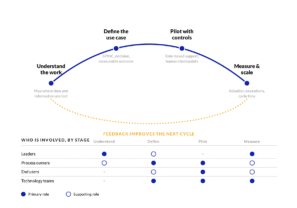
Your AI Strategy Is an Enablement Strategy
Tools will change. Teaching employees only the steps in one platform creates a narrow capability. Involving them in problem definition, process mapping, data assessment, controls, and measurement gives the organization a way to improve its systems as technology evolves.

By-Right Permitting: The Missing Lever for Scaling Modular Multifamily
Modular has already proven it can outperform traditional building methods on speed and cost per unit. The next frontier is outside the factory in the front end of the process, where projects either clear a path to construction or get stuck in review.

Remote Inspections and The Future of Factory Oversight
Remote inspection is becoming a practical part of modular construction oversight. Its value is greatest when it is used selectively, governed by clear procedures, and supported by complete traceability.
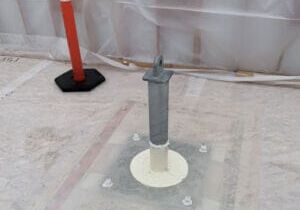
Reimagining Dry-In: How a Temporary-to-Permanent Roofing Strategy Mitigates Risk Between Modular Installation and Final Roof Construction
As volumetric modular projects continue to increase in scale and complexity, the Temporary-to-Permanent FiberTite Roof System represents an example of how traditional trade scopes can be reimagined through Design for Manufacturing and Assembly (DfMA) principles.

The Robotic Advantage: Addressing Labor and Quality Challenges in Construction Finishing
The off-site industry has already moved construction from an unpredictable jobsite into a controlled manufacturing environment. The next evolution is to make that environment increasingly intelligent, adaptable and automated.